Federal Tax Deductions Percentage Guide: Maximize Your 2026 Savings
Master federal tax deductions percentage limits for 2026. Learn AGI thresholds, charitable donation caps, business expense rules, and strategies to maximize ...

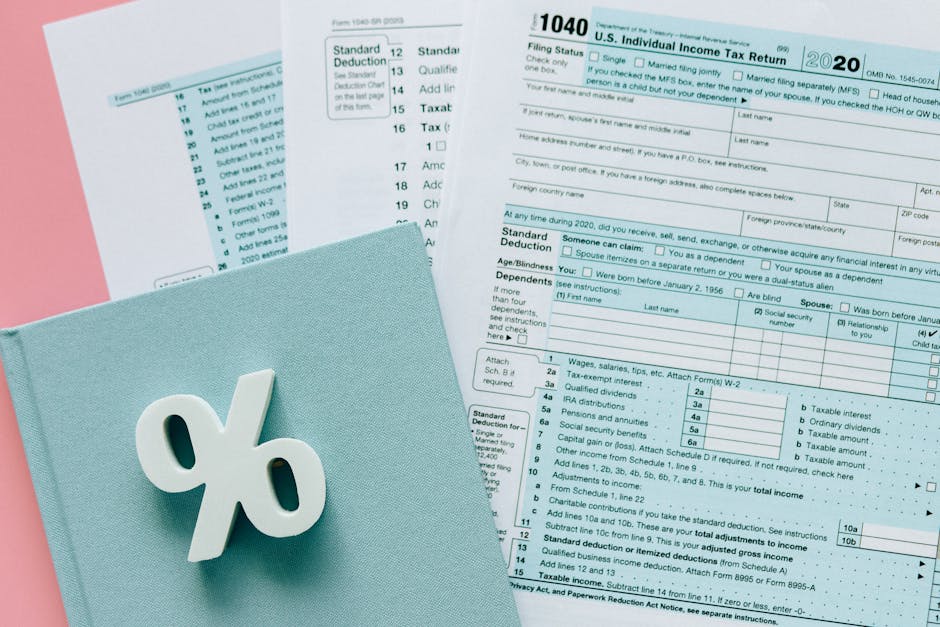
Federal tax deductions can significantly reduce your taxable income, but understanding the percentage limits and qualification requirements is crucial for maximizing your savings. With recent changes to tax law and updated deduction thresholds for 2026, knowing which expenses qualify, how much you can deduct, and the percentage limitations that apply can save you thousands of dollars this tax season. Whether you're itemizing deductions or taking the standard deduction for 2026, this comprehensive guide breaks down everything you need to know about federal tax deduction percentages and limits to optimize your tax strategy.
Understanding Federal Tax Deduction Percentages and AGI Limits
Your Adjusted Gross Income (AGI) serves as the foundation for calculating most federal tax deductions percentage limits. The IRS uses AGI thresholds to determine both your eligibility for certain deductions and the maximum amount you can claim in specific categories.
How AGI Affects Your Deduction Calculations
AGI-based percentage limits work differently than fixed dollar amounts. Instead of having a set ceiling, your deduction limit fluctuates based on your income level. For 2026, this system affects several major deduction categories, creating opportunities for strategic tax planning.
The calculation is straightforward: multiply your AGI by the applicable percentage to determine your maximum deduction in that category. However, the complexity arises when multiple percentage-based deductions interact or when your income approaches phase-out ranges.
Phase-Out Thresholds for 2026
High-income taxpayers face additional restrictions through phase-out provisions. For 2026, itemized deductions begin phasing out when AGI exceeds $326,050 for married filing jointly and $163,025 for single filers. The phase-out reduces your total itemized deductions by 3% of the amount exceeding these thresholds, with a maximum reduction of 80%.
This phase-out significantly impacts tax planning for affluent taxpayers, making percentage-based strategies even more critical for optimization.
Complete Tax Deductions List for Individuals: Percentage Limits by Category
Understanding the specific percentage limitations for each deduction category helps you maximize your comprehensive tax deductions list benefits while staying compliant with IRS requirements.
Charitable Contributions: The 60% and 30% Rules
Charitable deductions follow a tiered percentage system based on the type of organization and contribution method. Cash donations to qualifying public charities are limited to 60% of your AGI, while donations of appreciated property typically face a 30% AGI limit.
Consider a freelance graphic designer earning $80,000 AGI who donates $30,000 to charity. The 60% AGI limit allows for a maximum deduction of $48,000, meaning their entire $30,000 donation is deductible in the current year. However, if they had donated $50,000, only $48,000 would be deductible, with the remaining $2,000 carrying forward to future years.
Medical and Dental Expenses: The 7.5% Threshold
Medical expense deductions require exceeding 7.5% of your AGI before any deduction becomes available. This threshold eliminates the benefit for many taxpayers but can provide substantial savings for those with significant medical costs.
A high-income taxpayer with $200,000 AGI must exceed $15,000 in medical expenses (7.5% of $200,000) before claiming any medical deduction. If their medical expenses total $25,000, only $10,000 becomes deductible.
State and Local Tax (SALT) Deduction
The SALT deduction remains capped at $10,000 annually through 2025, with potential changes for 2026 still under legislative consideration. This flat dollar limit particularly impacts taxpayers in high-tax states, regardless of their AGI percentage calculations.
Mortgage Interest and Home-Related Deductions
Mortgage interest deductions don't follow AGI percentage limits but instead use debt amount thresholds. For 2026, mortgage interest remains deductible on acquisition debt up to $750,000 for married filing jointly ($375,000 for married filing separately).
Business and Self-Employment Deduction Percentages
Self-employed individuals and business owners navigate additional percentage-based deduction rules that can significantly impact their tax liability.
Home Office Deduction Calculations
The home office deduction offers two calculation methods with different percentage implications. The simplified method allows $5 per square foot for up to 300 square feet of office space, creating a maximum $1,500 deduction regardless of income.
The actual expense method requires calculating the business use percentage of your home. A small business owner using 500 square feet of a 2,000 square foot home for business purposes claims 25% of qualifying home expenses as deductions.
For example, if total home expenses (mortgage interest, property taxes, utilities, maintenance) equal $20,000 annually, the business deduction would be $5,000 (25% × $20,000). This method often provides larger deductions but requires detailed record-keeping.
Business Meal Deduction Limitations
Business meal deductions face a 50% limitation for 2026, returning to pre-pandemic rules. This means only half of qualifying business meal expenses become deductible, regardless of your business income level.
Vehicle Expense Percentage Requirements
Business vehicle deductions require tracking your business use percentage throughout the year. The IRS demands detailed logs showing business miles versus total miles driven. If you drive 20,000 miles annually with 15,000 for business purposes, your business use percentage is 75%, making 75% of vehicle expenses deductible.
Strategies to Maximize Your Deduction Percentages
Strategic timing and planning can optimize your percentage-based deductions, potentially saving thousands in taxes while avoiding common deduction vs exclusion mistakes.
Bunching Deductions Strategy
Bunching involves concentrating deductible expenses into alternating years to exceed the standard deduction threshold. For 2026, the standard deduction is $30,700 for married filing jointly and $15,350 for single filers.
A married couple with $18,000 in annual deductions benefits more from the $30,700 standard deduction. However, by bunching two years of charitable contributions, property tax payments, and other deductible expenses into one year, they might itemize $36,000 in deductions while taking the standard deduction in the following year.
Optimizing Charitable Contribution Timing
The 60% AGI limit for charitable contributions creates opportunities for multi-year planning. Taxpayers approaching the limit can time large donations to years with higher income or spread contributions across multiple years to maximize the percentage-based benefits.
Record-Keeping for Percentage-Based Deductions
Accurate documentation becomes crucial for percentage-based deductions. Business use percentages, medical expense tracking, and charitable contribution substantiation all require detailed records that support your claimed percentages.
Maintain separate business and personal accounts, photograph home office spaces, and save all receipts with business purpose documentation. The IRS scrutinizes percentage-based claims more heavily than fixed-amount deductions.
Common Mistakes and IRS Compliance for Percentage-Based Deductions
Understanding common pitfalls helps you avoid costly errors and potential audit triggers.
Exceeding AGI Limits and Carryover Rules
Many taxpayers lose deduction benefits by failing to understand AGI percentage limits. Charitable contributions exceeding the 60% limit don't disappear—they carry forward for up to five years. Proper planning ensures you eventually claim these deductions.
Medical expenses exceeding the 7.5% threshold in high-expense years should be carefully timed and documented. Consider accelerating medical procedures or payments into years when you're more likely to exceed the threshold.
Documentation Standards for Audits
The IRS expects substantiation that matches your claimed percentages. Business use of home, vehicle, and other percentage-based deductions require contemporaneous records, not reconstructed estimates.
For home office deductions, maintain floor plans, photographs, and utility bills. Vehicle deductions need mileage logs with dates, destinations, and business purposes. Medical expenses require receipts, insurance statements, and provider documentation.
Strategic Planning for Future Years
Percentage-based deductions create planning opportunities extending beyond single tax years. Understanding how AGI fluctuations affect your deduction limits enables multi-year tax optimization strategies that can substantially reduce your overall tax burden.
Consider income timing, retirement contributions, and business expense acceleration based on projected AGI levels and corresponding deduction percentage thresholds. This forward-thinking approach maximizes your tax deductions list benefits while maintaining full IRS compliance.