Which Form Is Used for US Individual Income Tax Filing? Form 1040, Explained
Confused by tax forms? Learn which form is used for US individual income tax filing, when Form 2553 applies, and get a small business tax cheat sheet.


Every year, millions of people stare at a stack of tax forms and freeze. Here is the truth: most individuals only ever need one main form, and once you know which one, the rest of tax season gets a lot less scary.
Key Takeaways
- Form 1040 is the standard form almost every individual uses to file federal income tax.
- Older forms like the 1040EZ and 1040A were retired years ago and no longer exist.
- Form 2553 is a business election form, not an individual filing form, and it has its own strict deadline.
- Freelancers and small business owners often juggle 1040 plus extra schedules for self-employment income.
- Knowing which form applies to you saves time, prevents rejected e-files, and avoids IRS notices, which is the whole point of navigating income tax filing like a pro.
Which form is used for US individual income tax filing?
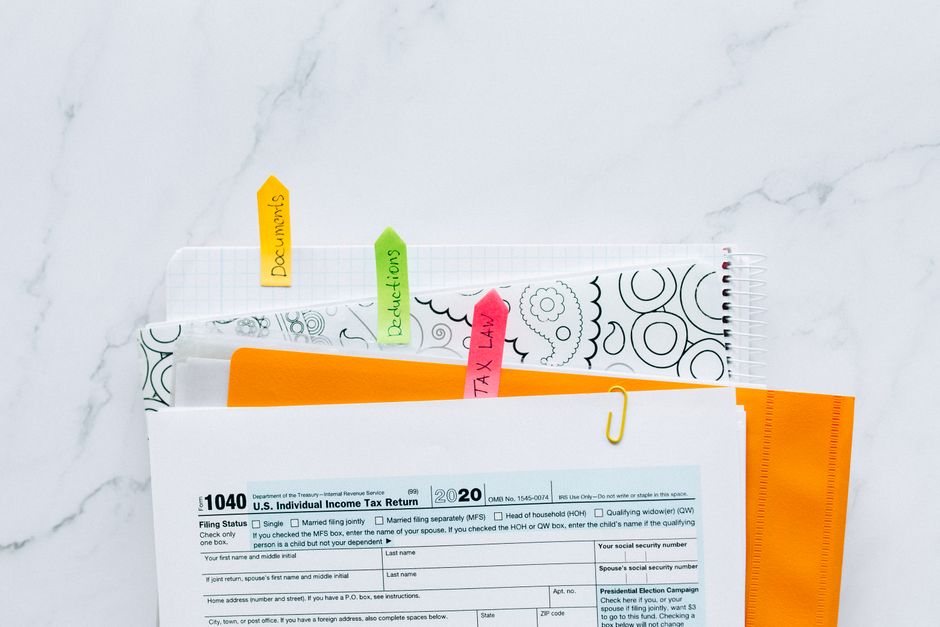
If you're an individual taxpayer in the United States, you file Form 1040. Full stop. It doesn't matter if you're a W-2 employee, a retiree, or someone juggling three side gigs. Form 1040 is the only form used for personal federal income tax returns filed with the IRS, and that's true whether your return is dead simple or loaded with extra paperwork.
For a long stretch of tax history, there were shortcuts. The 1040EZ and 1040A let people with simple situations skip some of the longer form's complexity. Those days are over. The IRS folded everything into one redesigned 1040, so the standard federal income tax return used by most individual taxpayers is now just that: one form, scaled to fit your situation through attached schedules.
There are two variations worth knowing, and neither changes the core logic.
Form 1040-SR exists for taxpayers age 65 and older. It's printed in a larger font and organized a little differently for easier reading, but it runs on the same rules as the regular 1040. Nothing about the tax math changes just because the print is bigger.
Form 1040-NR is for nonresident aliens. If that's your situation, it deserves its own deep dive elsewhere on this site. For nearly everyone reading this, though, the regular 1040 is the form that matters.
Why your 1040 usually needs extra schedules
Form 1040 rarely travels alone. The moment your finances have more than one moving part, a schedule attaches itself to that return, and figuring out which ones apply to you is half the battle of understanding your own tax picture.
Here's the rundown of the schedules that show up most often:
- Schedule 1 handles additional income and adjustments. Think unemployment compensation, or a student loan interest deduction that doesn't fit on the main form.
- Schedule C is where self-employed people and freelancers report business income and expenses. If you invoice clients or run a side hustle, this is your form.
- Schedule SE calculates self-employment tax, the Social Security and Medicare contribution that would otherwise come out of a paycheck through employer withholding.
- Schedule B kicks in when your interest or dividend income crosses the threshold the IRS sets for requiring the extra detail.
Here's the pattern worth internalizing: the base form doesn't change. What changes is how many schedules get stapled to it.
A retiree living on Social Security and a pension might file a bare 1040 with nothing attached. A freelance graphic designer, for example, is almost certainly filing that same 1040 with Schedule C for the design income and Schedule SE for the self-employment tax that comes with it. Same form, wildly different paperwork load.
Form 2553 and the S-corp election: a different animal entirely
Form 2553 has nothing to do with filing your individual taxes. It's the form an eligible small business files to elect S corporation tax treatment, and it operates on a completely separate timeline from your personal return. Confusing the two is one of the most common (and costly) mix-ups small business owners make.
Here's where timing gets unforgiving. For a calendar-year business, the election deadline is March 15 of that same tax year, not the year after. If a single-member LLC wants S-corp treatment to apply starting with the 2027 tax year, the Form 2553 S-corp election filing needs to be in by March 15, 2027. Miss that window and the election generally doesn't take effect until the following tax year.
There's a lifeline, sort of. The IRS has a late-election relief process for businesses that miss the deadline, but it requires a reasonable cause explanation and approval isn't guaranteed, which is why following complete Form 2553 instructions from the start matters so much. Treat it as a backup plan, not a strategy.
This isn't a decision to make lightly or alone. Electing S-corp status changes how owners pay themselves, how payroll gets structured, and how self-employment tax gets calculated on the owner's share of income. It's a conversation to have with a tax professional well before the deadline, not a box to check while you're filing something else.
The small business tax cheat sheet: matching the right form to your situation
Different business structures file completely different forms, and mixing them up is how people end up filing the wrong return entirely — exactly what the complete small business tax cheat sheet is designed to prevent. The short version: sole proprietors stay on the personal 1040, while partnerships, S-corps, and C-corps all file separate entity-level returns that feed into (or sit apart from) the owners' personal taxes.
Sole proprietors and single-member LLCs don't file a separate business return at all. You attach Schedule C to your personal Form 1040, and that's it. No standalone business form needed.
Partnerships and multi-member LLCs file Form 1065 at the entity level. The partnership itself doesn't pay income tax. Instead, it issues Schedule K-1s to each partner, who then reports that income on their personal 1040. Picture a two-person consulting LLC: the entity files the 1065, and each partner takes their K-1 numbers straight to their own return.
S corporations file Form 1120-S. Just like partnerships, the income passes through to shareholders via K-1, and each shareholder reports their share on their personal 1040.
C corporations file Form 1120 and are taxed as their own entity, completely separate from the owners. This is the one structure on this list where the business itself pays income tax directly, which makes it fundamentally different from everything above it.
Here's the whole thing side by side:
| Filer type | Form used | Filed by whom |
|---|---|---|
| Individual (employee, retiree, most taxpayers) | Form 1040 | The individual taxpayer |
| Sole proprietor or single-member LLC | Form 1040 plus Schedule C | The individual owner |
| Partnership or multi-member LLC | Form 1065 (entity), K-1 flows to owners' 1040 | The partnership, then each partner |
| S corporation | Form 1120-S (entity), K-1 flows to shareholders' 1040 | The corporation, then each shareholder |
| C corporation | Form 1120 | The corporation itself |
Bookmark that table. It answers more tax questions in five rows than most people figure out in a full filing season.
Common mistakes that trip people up
Most tax filing errors aren't about math. They're about picking the wrong form or the wrong deadline in the first place, and those mistakes are entirely avoidable once you know the traps.
Thinking a business needs its own separate "income tax form." A sole proprietor doesn't need a business return at all. Schedule C attached to a personal 1040 covers it.
Confusing Form 2553 with an actual tax return. The election form and the return the business (or its owners) eventually files are two different documents on two different timelines. One doesn't replace the other.
Missing the March 15 election deadline. This one is expensive. Miss it, and the S-corp treatment doesn't apply for the year you wanted it, generally pushing the benefit out to the next tax year.
Forgetting that state filing rules run on their own track. Federal forms and deadlines don't automatically sync with your state's requirements, so it helps to see deadlines, IRS tools, and filing rules decoded in one place. Check your state's rules separately, every year, because they don't always move in lockstep with the IRS.
Most of this workload is procedural, not complicated math. That's probably why Americans spent 28 billion hours creating tax forms and individual credit reports in 2017. Knowing which form applies to you before you start isn't a nice-to-have. It's the single biggest time-saver available to you.
The bottom line
Strip away the jargon and it comes down to this: individuals file Form 1040, businesses that want S-corp treatment file Form 2553 on a tight deadline, and everything else is just a schedule or entity return layered on top. Learn that structure once and tax season stops feeling like a guessing game.
Frequently Asked Questions
Do I still need to file the 1040EZ if my taxes are simple?
No, the 1040EZ and 1040A were phased out. Everyone now uses the standard Form 1040, which the IRS redesigned to work for simple and complex returns alike.
Is Form 2553 something I attach to my personal tax return?
No, Form 2553 is filed separately by the business to elect S-corp status. Your personal 1040 comes later and reflects the income that flows from that business structure.
What happens if I miss the Form 2553 deadline?
Your S-corp election typically will not take effect until the next tax year. There is a late-election relief process, but it requires a reasonable cause explanation and is not guaranteed.
Can a freelancer just use the regular 1040 without any extra schedules?
Almost never. If you earned self-employment income, you will attach Schedule C for the income and expenses and Schedule SE for self-employment tax.
Does an LLC change which form I file?
Not by itself. A single-member LLC is taxed like a sole proprietorship by default, so you still use Form 1040 with Schedule C unless you elected corporate tax treatment.